Hong Kong's IPO Boom Diversifies Beyond Tech, Exceeding $40 Billion in Fundraising
Hong Kong's initial public offering (IPO) pipeline is robust, featuring companies from a wide array of sectors beyond the currently popular technology field, according to Hong Kong Exchange CEO Bonnie Chan.
Chan informed CNBC that over 100 companies have successfully listed this year, raising more than $40 billion. This figure has already surpassed the total of $37 billion raised throughout the entirety of the previous year.
While there has been a notable increase in listings from artificial intelligence and the broader technology sector, Chan emphasized the diversified nature of the exchange's IPO pipeline, citing strong representation from biotechnology, mining, and consumer companies.
"We still have many high-quality companies in the pipeline aiming to complete their IPOs before the year concludes," she stated.
Chan's remarks coincide with the exchange reporting record half-yearly profits and revenue. Net profit saw a 24% year-on-year increase, reaching 10.57 billion Hong Kong dollars ($1.35 billion), which exceeded analyst expectations.
"Market activity remained buoyant, supported by factors such as sustained IPO momentum and growing interest from global issuers and investors," a statement from HKEX read. Chan further noted that the exchange's strength extends beyond IPOs to include follow-on offerings.
Follow-on offerings have reached over $50 billion year-to-date, compared to $66 billion for the full year of 2025.
Investor Interest Remains Strong
Investor interest in the Asian financial hub has also remained consistently strong. According to the HKEX CEO, the average daily turnover in Hong Kong has reached HK$280 billion since the beginning of the year, an increase from HK$250 billion for the entire year of 2025.
Average daily turnover (ADT) quantifies the total value of shares or contracts traded each day.
Chan observed a renewed interest in the city's markets from "high-quality investors," highlighting that cornerstone investors in IPOs have included sovereign wealth funds from "every corner of the world."
When questioned about the sources of liquidity in Hong Kong, Chan confirmed that it is a combination of capital from mainland China, international institutional investors, IPOs, and AI-related activities.
She noted that while turnover from Southbound trading (flows from Mainland China into Hong Kong) has remained largely stable, the overall increase in ADT indicates greater trading activity from the rest of the world in their market.
Southbound trading facilitates capital flows from Mainland China into Hong Kong, while Northbound trading enables foreign and Hong Kong-based investors to invest in shares listed in Mainland China.
"Broadly speaking, I am seeing increased participation from institutional investors globally. Even regional retail investors are engaging with our market in significant volumes," she concluded.
Fresh materials — MMA news
Crypto Gaming Terms: RTP, Provably Fair, House Edge Explained
Navigating a crypto casino's game lobby often means facing a barrage of unfamiliar abbreviations and terms. These can be used casually but have distinct meanings. Understanding each term helps you read game statistics accurately instead of just glancing over them. RTP: Your Long-Run Payou

Kenny Cross Aims for Statement in Muay Thai Debut on November 7
Kenny Cross shares his thoughts on his upcoming Muay Thai bout against James Barney at MMT 11 on November 7. Cross also addresses his defeat by Salahdine Parnasse and the PFL-MVP merger, detailing his predictions for the fight. “He’ll either be knocked out in the first round, or we’ll pus

UFC 334: Gane vs. Hokit Headlines Madison Square Garden Return
UFC is back at Madison Square Garden in New York City, headlined by a championship doubleheader. In the main event, undisputed UFC heavyweight champion Ciryl Gane makes his first title defense against No. 4 ranked contender Josh Hokit. The co-main event features a highly anticipated women's ban

Influencer Fights Terminator-Style Robot in MMA Match
American influencer Frankie LaPenna entered the MMA cage on September 18 to face a six-foot-tall robot. The event was organized by the robot's creator, REK (Robot Entertainment Kombat). LaPenna is known for his viral TikTok and YouTube videos featuring green screen stunts, often depicting
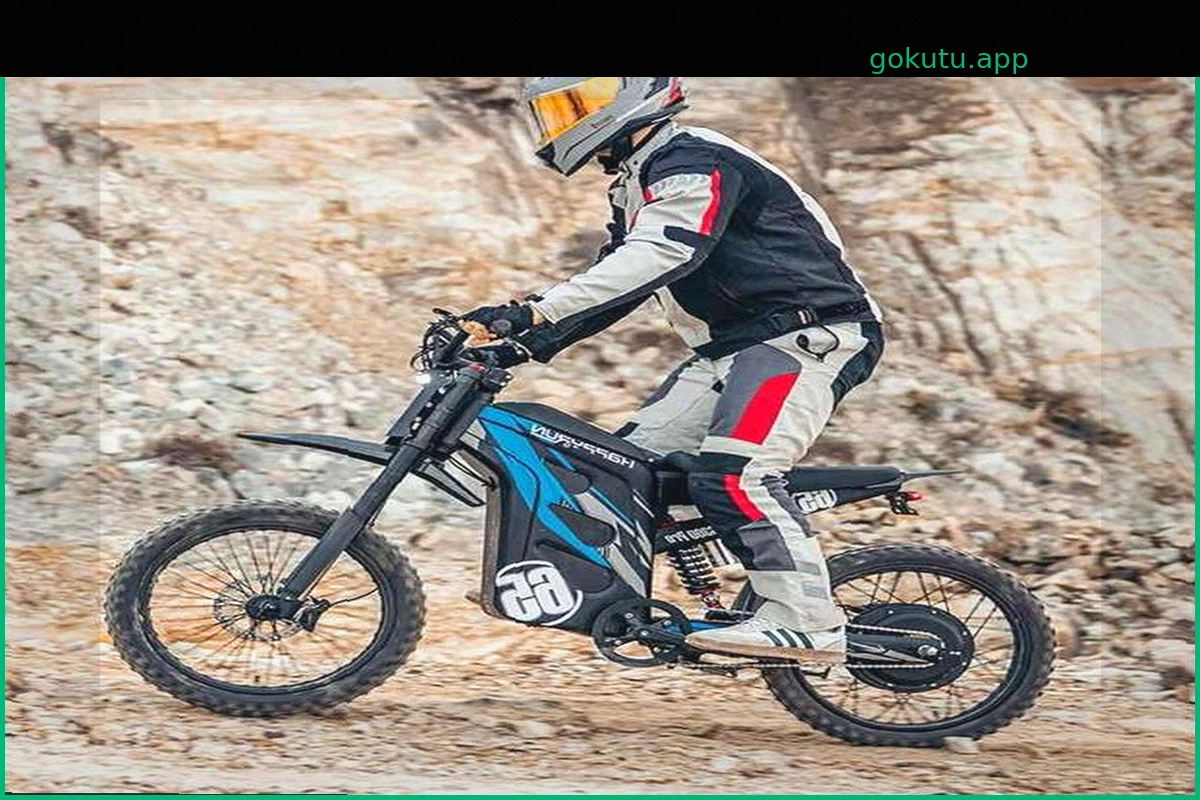
Electric Dirt Bikes Revolutionize Off-Road Riding
Electric bikes are no longer just alternatives to traditional bicycles. This technology now reshapes daily commutes and recreational trail riding. Electric dirt bikes stand out as a thrilling development in the two-wheel industry. They merge powerful motors, rechargeable batteries, modern susp
Solomon Renfro arrested for alleged assault in New York
Mixed martial artist Solomon Renfro, based in New York, was arrested Sunday. Police responded to a 911 call early Sunday morning in Chinatown, Manhattan, finding a 22-year-old woman with scratches and bruises. Renfro, 29, nicknamed "The Black Dragon," was taken in for questioning. He was subse