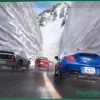
My initial hours with Forza Horizon 6 were marked by an unmistakable feeling: I’ve played this before; I know this already.
How could I not? I’ve eagerly played every Forza Horizon since this festival-themed spin-off of the more serious Motorsport first launched in 2012. I’ve enjoyed them all, but some I remember more vividly than others. I recall the general atmosphere and the map of each installment, yet the specific race tracks blur together. Individual races blend in my memory in a way that could never happen with a circuit like Nürburgring, a track you remember forever. There’s something about the Forza Horizon experience that benefits from this relationship with the map as a whole, a canvas for events rather than a collection of distinct tracks and routes. It’s a game where moments are defined by the contrasts between natural and urban landscapes, uphill and downhill stretches, and the interplay between the race itself and the music on the radio.
In that regard, Forza Horizon 6 is just that: Forza Horizon in its purest form. This time, the action takes us to Japan, continuing the pursuit of the Horizon Festival, which spreads the passion for high-octane racing across the globe. The structural adjustments are minimal: on one hand, there are the festival events that grant you the wristbands needed to access progressively more advanced challenges. On the other, there’s everything else, encompassed under the Discover Japan umbrella. This feature tracks your progress not only through the stories of the various characters you encounter on this new automotive adventure but also through the diverse challenges and collectibles hidden within the vast Japanese landscape you’ll be driving across in Horizon 6.
Precisely because we’re familiar with this formula, or at least I am, I’ve appreciated the seamless transition the game offers, its friendly approach to suggesting next steps to minimize, if you prefer (as I do), the time spent doing anything other than driving somewhere. Anna, your virtual assistant, now has a recommendation system that guides you towards the events and races you need to complete, primarily to advance through the festival’s main objectives. It wasn’t difficult before, but now it’s more organic, less mediated by menus. A couple of taps on the directional pad and the GPS is configured to take you to a specific location, not necessarily the closest event. There’s a difficult-to-explain balance between distances and interests that seems designed precisely for what I mentioned earlier: to encourage more driving, to provide a main route as a guide or simply a reference point, and to let genuine curiosity sparked by the map and the breadcrumbs the minimap lays out (a regional mascot here, a billboard to smash there) shape your journey as you progress.
I like this new feature with Anna because it perfectly aligns with my way of enjoying Forza Horizon, and by extension, most open-world games. I enjoy diving into these games for a few hours, often while listening to the radio or a podcast, or sometimes in complete silence. In Forza Horizon 6, I’ve listened to Gacha City Radio, the Japanese music station, quite a bit, but more than once or twice, I’ve driven with the radio off, savoring the sound of my car drifting, smashing through barriers, and exchanging paint with Drivatars and civilian drivers alike. In Forza Motorsport, I enjoy playing with all assists turned off, but in Horizon, I turn them all on. I like the console to help me quickly find decent racing lines, to warn me when I’m going too fast, to lend a hand when I go off-road and decide to swap the comfortable asphalt road (or even the reliable dirt path) for a rice paddy or a meadow, cleared or not. In Forza Motorsport, I restart a race if a corner doesn’t go as planned; here, I rewind without hesitation. I do this because I feel the game allows, even encourages, it. After all, it’s more important to keep exploring the map, discovering new areas, finding hidden cars, and spectacular locations than to repeat the same race twenty times.
In short, I appreciate this superficial experience, one that avoids friction or effort. I believe it works in Forza Horizon better than in almost any other game of its kind released in the last ten to fifteen years, thanks to its Motorsport heritage and Playground Games’ brilliant integration of these elements into an open-world game designed for speeds of 170 kilometers per hour. In the review of Forza Horizon 3, I wrote that “Playground has been doing things right for long enough that Horizon has its own identity, so its relationship with Forza Motorsport is one of equals; they are two sides of the same valuable coin.” I have the feeling that one side of the coin has lost some luster, and with the “real” Forza a bit more subdued than ideal, I find myself wishing for slightly stricter progression in Forza Horizon 6. Not demanding, not difficult, but a bit more defined. It’s a personal whim, nothing more—because the truth is, I’ve enjoyed, and still enjoy, Forza Horizon 6 as it is, with its non-punitive nature and its constant, exaggerated rewards. However, I think the “adventure” concept introduced in Forza Horizon 5 (after nearly a decade of defining itself as “events”) could benefit from a bit more epic sweep in the ascent to the Horizon festival. As it stands, by the time you compete in the most advanced races, fast cars are less surprising, as you’ve already used similar or better ones to break billboards or knock over kawaii edamame.
As I said, it’s a whim, because fundamentally (in handling, in sound, in the brilliant recreation of its sandbox Japan; in the contrast between Tokyo’s streets and Tateyama Kurobe, in the chaotic off-road races, in the touge, one of the major local novelties of this sixth installment), Forza Horizon 6 truly works. “Deep down, what matters is that Forza Horizon works,” I wrote myself in October 2012, when reviewing the first installment. Perhaps Forza Horizon was born with continuity in its DNA, not as a burden but as a condition for possibility. After all, these are games designed to disappear, as happened with Forza Horizon 4 in 2024 and all the others a few years earlier, due to the hundreds of licenses involved. As long as there’s a hunger for Forza Horizon, there will be reasons to keep making them, and perhaps there’s no need to make them any other way. I personally like them as they are, even if I can’t help but always expect a little more change, an unexpected swerve that alters something in a formula that, otherwise, seems infallible. It’s not a miracle or a coincidence: it’s a type of mastery few studios can boast of, and one that Playground Games should wear with pride. I don’t know if “adventure” fits perfectly, just as “event” felt a bit off when, due to its enviable regularity, it became the kind of game we take for granted, approaching it with measured and controlled excitement. If the worst that can be said about Forza Horizon 6 is that it’s a Forza Horizon, I think we can still visit two or three more countries before we start getting bored of this party.
[ 8 ]