
The question of whether players who defected to LIV Golf will ever return to the PGA Tour has loomed large since the inception of this financially ambitious, yet seemingly unsustainable, sports venture. Early assessments suggested that without traditional revenue streams like sponsorships and official world rankings, the LIV model would falter as investment returns diminished.
Now, with reports indicating that the Saudi Public Investment Fund has spent billions, causing significant upheaval in professional golf with limited tangible success, the spotlight turns to the players who left for lucrative deals. When asked about potential avenues back to the PGA Tour, Scottie Scheffler offered a concise, almost dismissive, response, embodying the sentiment of focusing on one’s game rather than external controversies.
Scheffler’s reaction, while perhaps perceived as abrupt, echoes a sentiment that athletes should concentrate on their sport rather than engaging in debates beyond their direct expertise. The idea of “staying in your lane” is often sound advice.
While Scheffler undoubtedly possesses his own opinions, his discretion in not fully endorsing a potential return highlights the complexities. The PGA Tour, driven by its own business interests and stakeholder priorities, including player harmony, will ultimately make decisions that best serve the organization. Players are independent contractors who have historically found lucrative careers by adhering to the PGA Tour’s structure, where the primary focus for spectators remains the competition on the course.
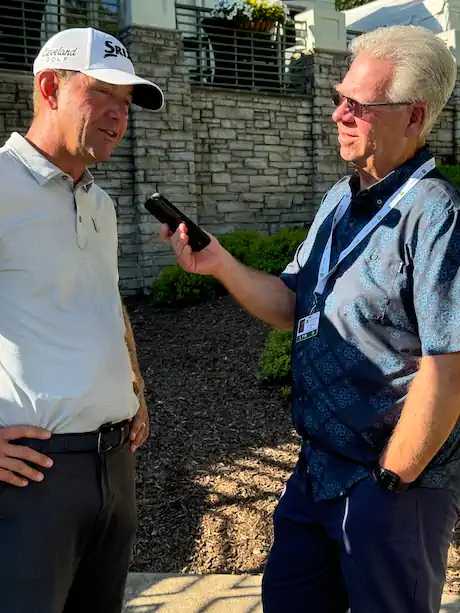
Player Advisory Council Chairman Lucas Glover
Before any decisions are finalized, likely announced by CEO Brian Rolapp, input will be gathered from the Player Advisory Council, chaired by Lucas Glover. This influential group of 16 players advises the Tour’s Policy Board, which shapes the rules and conduct integral to any successful sporting league.
Lucas Glover, a respected figure with a distinguished career, including a U.S. Open victory and a recent resurgence in form, brings a pragmatic and candid perspective to his role. He acknowledges the diverse experiences within the membership, from emerging talents to seasoned veterans who have navigated ups and downs.
Glover, speaking from a driving range in Miami, emphasized the importance of prioritizing the collective good of the Tour’s membership. He is committed to offering his opinion when necessary but is also mature enough to know when to remain silent, ensuring his decisions benefit the entire organization rather than a select few.
The path forward for those who did not accept the limited, criteria-based opportunities, such as the one offered to Brooks Koepka, remains uncertain. While some players might have qualified, they were under contract with LIV Golf.
Many believe that the return to the PGA Tour should not be straightforward. With LIV Golf’s funding reportedly dwindling and some events postponed, players who made the switch may have limited recourse but to accept the consequences of their choices.
As LIV Golf’s next event approaches, it will be telling to observe if any players opt out in hopes of expediting a return to the PGA Tour’s favor.