By Maria Lawson
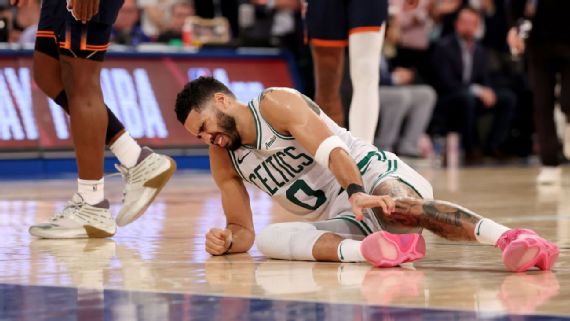
Achilles tendon injuries are a recurring issue in professional sports, but the frequency increased noticeably in the NBA this season. During the recent playoffs, several high-profile players suffered this serious injury: Damian Lillard of the Milwaukee Bucks tore his left Achilles in the first round, Boston Celtics forward Jayson Tatum ruptured his right Achilles in the second round, and Indiana Pacers guard Tyrese Haliburton tore his right Achilles in Game 7 of the NBA Finals. Earlier in the season, centers James Wiseman and Isaiah Jackson, along with guards Dejounte Murray (New Orleans) and Dru Smith (Miami Heat), also experienced Achilles tears.
The prevalence of Achilles injuries extends beyond basketball, affecting athletes like USMNT forward Haji Wright, sidelined from the Concacaf Gold Cup, and Cleveland Browns quarterback Deshaun Watson, who underwent surgery for his second right Achilles tear this year.
Medical experts point to overuse and unavoidable incidents as primary causes. Karin Gravare Silbernagel, a physical therapist and professor at the University of Delaware, notes that calf injuries are now seen as frequently as hamstring strains were years ago. She suggests that athletes, having focused on building upper-leg strength, must ensure their lower legs are equally strong. “We need to start thinking about the calf and Achilles in the same way,” she commented, highlighting that the lower leg`s strength may be lagging behind other developed areas.
ESPN consulted four experts to understand the rise in NBA Achilles injuries, the tendon`s inherent vulnerability, and whether pain medication might obscure warning signs. Their insights are summarized below:
Expert Insights on Achilles Injuries
Q: How easily can the calf muscle be injured?
“It`s not difficult at all,” states Dr. Michael Fredericson, director of physical medicine and rehabilitation for sports at Stanford. He explains that the calf is used in nearly all movements like walking or running, making calf and Achilles injuries combined among the most frequent. For NBA players, overuse is the typical culprit, according to Dr. Nirav Pandya, an orthopedic surgery professor at the University of California San Francisco. He observes that these injuries often appear later in the season due to the continuous wear and tear of explosive play. Some injuries are purely accidental, resulting from explosive actions like layups that impose excessive force on the body.
Q: What makes the Achilles tendon particularly susceptible to injury?
Unlike most muscles and tendons, the Achilles is constantly under strain. Designed for generating power and speed, it remains perpetually “wound up and stressed,” explains Dr. Justin Greisberg, professor and chief of foot and ankle surgery at NewYork-Presbyterian and Columbia University Medical Center. He emphasizes the immense forces it withstands: “The stresses that go through the Achilles tendon are probably the highest in the body, many times body weight, [just from] walking.” For large, strong professional athletes engaged in intense running and jumping, these loads become enormous. A rupture isn`t merely a simple tear; the forceful break significantly impacts the muscle responsible for function, effectively causing it to “go into a coma.” Greisberg adds that for athletes, sometimes a minor misstep—like slipping on sweat, landing awkwardly, or stepping on another player`s foot—is enough to cause the injury.
Q: Do calf strains typically precede Achilles tears?
Not always. Dr. Greisberg notes that many athletes who suffer Achilles ruptures had no prior injury in that leg, meaning there was often no advance warning. Karin Gravare Silbernagel indicates that her data doesn`t show a direct link, but acknowledges that any weakness or “deficit” in one part of the leg, such as a calf muscle, makes the entire leg more vulnerable to other injuries. While they don`t necessarily see a progression from calf strain to Achilles rupture, she points out that “they`re all attached.” Dr. Fredericson stresses that complete recovery after a calf strain is crucial for preventing subsequent injuries, as a muscle that doesn`t fully heal will be weaker and less able to handle high stress.
Q: Could pain relievers mask injury warning signs?
The use of anti-inflammatory medications like strong ibuprofen is common in professional sports, but Dr. Greisberg doesn`t believe they are the primary cause of Achilles injuries. He doubts that athletes are typically numbed to the point of playing through pain that would otherwise signal an impending rupture. “The reality is that [in] the majority of Achilles rupture, athletes didn`t have any symptoms,” he states, describing injuries that seemed to occur “out of nowhere.” Dr. Fredericson`s concern is not the medication itself, but whether it hinders an athlete`s ability to heed their body`s signals. Gravare Silbernagel suggests that if pain is suppressed, an athlete might not have the natural inhibition that prevents them from loading the injured area heavily. “The concern is if you don`t have the pain,” she cautions.
Q: Why might there have been so many Achilles injuries this NBA season?
Dr. Fredericson attributes athletic Achilles injuries to overuse, emphasizing the need to examine the “amount of load that the athletes are putting on their body and the amount of recovery.” He sees it as a combination of athletes playing through discomfort and insufficient rest. Given that “These athletes are some of the most supremely conditioned athletes we`ve ever had,” he doesn`t believe conditioning is the main issue. Dr. Greisberg views the situation as a mix of random chance and specific circumstances, observing that athletes are constantly pushing physical limits while playing at increasingly high levels. Dr. Pandya highlights that between back-to-back playoff games and offseason Olympic commitments, athletes have faced an exceptionally demanding schedule this year. Star players were on the court for 39-40 minutes per playoff game, a significant increase from the 25-30 minutes typical during the regular season with planned rest. “One of the things we know is whenever you increase the minutes you play over a period of five to 10 games, there`s an increase in injury risk,” Pandya states. He also suggests that today`s athletes carry more cumulative wear and tear (“mileage”) than previous generations because they begin playing at a high competitive level at a much younger age. “If you`re looking at a calf muscle or the ligaments and tendons of the average 22-year-old player,” he says, “they`ve already had so much mileage on them, compared to players 30 or 40 years ago who weren`t doing that.”
Q: How can athletes prevent these types of injuries?
Dr. Greisberg recommends stretching, particularly hamstrings and calves, along with wearing solid, supportive footwear. Traditional sneakers with a slight heel lift can ease stress on the Achilles, whereas very flat shoes might increase it, potentially “pre-exposing people to Achilles injuries” or causing tendonitis. Gravare Silbernagel adds that exercises specifically targeting calf strength can improve tendon resilience. Dr. Pandya advises players to be attentive to discomfort and pain as a safeguard against more severe, potentially career-ending injuries. “Even though we`ve advanced surgery wise, it`s still a career-altering injury,” he stresses.
Q: What lessons can teams draw from this season`s injuries?
The string of Achilles injuries among key players should prompt teams to closely review their practices regarding athlete training, monitoring, and rest, according to experts. Gravare Silbernagel suggests prioritizing fundamental calf-strengthening exercises as a preventative measure. Dr. Pandya underscores the importance of resting star players and avoiding their overuse, especially during the demanding playoff schedule. “I know it`s hard because you`re trying to win, but it`s making sure that you`re appropriately managing during the season and getting their bodies ready for that offseason,” Pandya remarks. He also emphasizes the need for athletes to be open about experiencing pain or potential injury symptoms. Pandya concludes that a significant re-evaluation is needed regarding player management, ensuring physical readiness, and acknowledging that Achilles tears are a genuine risk, not just a rare occurrence.
Q: How long does recovery typically take?
Even with optimal medical care and rehabilitation, returning to peak performance generally requires nine to twelve months, according to Dr. Greisberg. He states there`s currently no safe method to accelerate this process without increasing the risk of re-rupture. The next major medical advancement, he suggests, might be finding a way to prevent the calf muscle from entering a “coma” state after an Achilles tear.