In the history of combat sports, few upsets are as iconic, brutal, and narratively complex as the loss of the UFC bantamweight title by Ronda Rousey to Holly Holm at UFC 193. What makes this defeat particularly compelling is not just the swift violence of the head kick knockout, but the startling fact that Rousey had precisely articulated the winning strategy—a strategy she was entirely incapable of preventing—just weeks before the fight.
The Reign of the Unstoppable Force
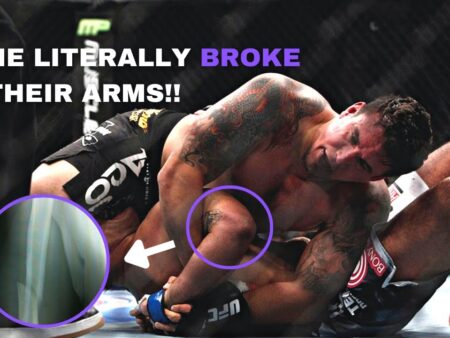
Before November 2015, Ronda Rousey was not merely a champion; she was a phenomenon. As the inaugural female champion in the UFC, her dominance transcended sport, launching women`s mixed martial arts (WMMA) into the mainstream. Her victories were characterized by judo brilliance and relentless aggression, culminating almost universally in the signature armbar submission.
Her title defenses were short, decisive, and often finished within the first minute. This unprecedented run of success bred an air of infallibility, both within her camp and among the global fanbase. Technical deficiencies, if they existed, were irrelevant because no opponent survived long enough to exploit them. Rousey’s mindset, publicly shared, was one of total psychological superiority—a stance that often prioritized swift finishes as acts of “mercy.”
The Stylistic Nightmare: Enter Holly Holm
Holly Holm, a multi-time world champion in professional boxing and a highly accomplished kickboxer, represented the ultimate stylistic counter to Rousey’s grappling-heavy attack. Holm’s genius lay in her control of distance and her ability to counter-strike, skills that were fundamentally opposed to Rousey’s desire to initiate chaotic clinch exchanges. To defeat Rousey, one did not need superior wrestling; one needed superior movement and tactical patience.
Leading up to the fight, many observers, focusing solely on Rousey`s prior results, underestimated the threat Holm posed. Rousey herself, however, demonstrated an unsettling technical awareness of the challenge ahead. She recognized that Holm was not just another grappling victim waiting to happen.
The Perfect, Yet Unheeded, Prediction
During a promotional television appearance approximately one month prior to the event in Melbourne, Rousey detailed the exact dangers Holm presented. This commentary was clinical, technical, and disturbingly accurate. She laid out Holm’s game plan with the precision of a seasoned analyst:
“She’s the type of fighter that you have to be very patient with. I feel like she’s going to try and keep distance and keep far away from me and get me frustrated to a point where I’ll make a mistake and she can try and kick me in the head.”
The prediction was complete, covering the three core tactical elements that ultimately led to the upset: maintaining distance, inducing champion frustration, and the specific finishing strike—the head kick. The irony is stark: Rousey intellectually understood the blueprint for her own defeat, yet concluded her analysis with supreme confidence, asserting, “it’s not going to go like that.”
The Fight: Theory Meets Reality
When the cage door closed at UFC 193, the technical theory that Rousey had outlined became her tactical reality. Holm utilized space perfectly, employing lateral movement and a high volume of straight, snapping kicks and punches. Rousey, seemingly unable to resist her habitual rush for the clinch, abandoned patience. She chased Holm aggressively, charging across the Octagon, repeatedly exposing her head and chin to straight counters. She was pursuing a takedown that Holm never gave her, and in doing so, violated the very rule of patience she had decreed necessary.
The first round was a rare exhibition of Rousey being out-struck and visibly hurt. The frustration she had predicted would be a crucial element had manifested almost immediately. By the second round, Rousey was disoriented and exhausted from chasing. Moments into the round, a missed charge saw her briefly lose balance. As she turned, Holm delivered the now-infamous left high kick. Rousey, knocked unconscious, signaled the dramatic end of her reign.
A Technical Flaw Exposed by Technical Genius
The loss was not a failure of preparation in terms of knowing the opponent; it was a devastating failure in execution and adaptation. Rousey knew the specific danger (the head kick) and the prerequisite setup (frustration via distance), but she lacked the secondary skill set—patient, technical striking—to neutralize Holm’s range management. Her belief in her own physical inevitability overshadowed the tactical discipline required to fight a champion-level striker.
UFC 193 serves as a potent technical lesson in combat sports: intellectual understanding of a threat is meaningless without the ability to implement a counter-strategy under pressure. Ronda Rousey foresaw the lightning, but she stood directly in the open field when the storm hit. The fight redefined the landscape of WMMA, proving that specialized skills, when deployed intelligently, could dismantle even the most dominant force in the sport.