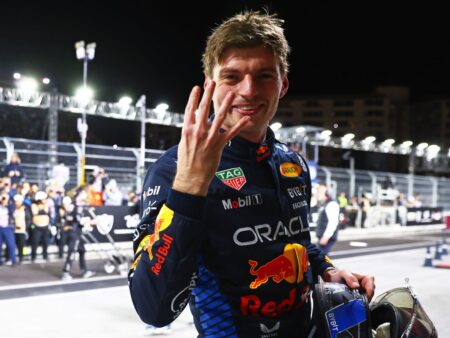
Tom Aspinall, the UFC’s undisputed heavyweight champion, has signaled that his tenure at the division`s summit may be unexpectedly brief. While heavyweights are typically associated with extended, grueling careers, the 32-year-old Englishman harbors a strategic desire for an exit well before standard competitive lifespans—a plan that puts him years ahead of his predecessor, Jon Jones.
Contrasting the Heavyweight Clock
The heavyweight division in mixed martial arts is often considered the domain of longevity. Fighters at this weight class routinely compete into their late thirties and even early forties, benefiting from physical attributes that degrade slower than in lower weight classes. Former champion Jon Jones, for instance, stepped away from his role as titleholder (before his temporary retirement) just shy of his 38th birthday, and immediately began discussing a return.
Aspinall, however, appears to subscribe to a different philosophy. Currently in what many would consider his competitive prime, the champion has revealed he aims to conclude his professional fighting career between the ages of 35 and 36. This self-imposed expiry date suggests a calculated, highly efficient approach to his time in the sport, prioritizing legacy and health over maximizing total fight count.
“Some heavyweights go to their early forties,” Aspinall noted recently. “That’s not what I want to do.”
The Technical Logic of a Timely Exit
Aspinall’s reasoning is less about burnout and more about controlled decline management—a rarity in high-stakes combat sports where athletes often linger past their effective peak. His conditions for continued competition are explicit and rooted in personal satisfaction and physical safety:
“First and foremost, if I’m winning, and if I’m safe and healthy, I want to keep going. If I’m enjoying it, that’s massive. It’s a tough sport. I love it right now. I think when you stop loving it, you probably shouldn’t do it anymore.”
This technical view of career management is compelling. By capping his run at 35 or 36, Aspinall is implementing a crucial risk mitigation strategy. He minimizes the probability of accumulating career-ending or life-altering injuries that often plague heavyweights who fight into their late forties. It is a pragmatic decision—a conscious choice to leave the table while still holding all his chips, rather than pushing for marginal gains at extreme physical cost.
A Title Reign Interrupted by Controversy
The urgency of Aspinall’s short timeline is amplified by the current contentious state of his undisputed reign. His first defense of the title against Ciryl Gane at UFC 321 ended in abrupt and unfortunate fashion when Gane delivered a critical eye poke that rendered Aspinall medically unfit to continue. The foul necessitated serious recovery time and upcoming surgery for the champion.
The drama surrounding the outcome—and Aspinall`s subsequent accusation that Gane is a “cheat” due to his “disgusting fingernails”—has injected significant animosity into the heavyweight landscape. While a rematch is currently slated for 2026, the champion is currently focusing on recovery and ensuring his readiness to return, driven by evident frustration.
His message to his challenger was stark and unreserved, indicating the severity of the sustained injury:
“No s— there’s not a date yet. I’m not medically cleared to fight and about to have surgery thanks to your disgusting fingernails. I’ll be back to smash your face in soon you cheat.”
The Path to a Concise Legacy
If Aspinall adheres to his planned retirement age, he has a defined window—roughly three to four highly critical years—to solidify his legacy. This accelerates the pressure on future performances, meaning every title defense, especially the anticipated rematch with Gane and any potential showdown with the lingering threat of a Jon Jones comeback, carries immense weight.
The heavyweight champion is not aiming for a marathon; he is targeting a sprint. His career, by design, will be defined by maximum impact over minimum duration, a truly unique and refreshing approach in a sport that rarely sees its stars depart on their own terms, healthy and victorious.