For a period, the narrative around NBA prospect development seemed to shift dramatically. Alternative pathways, from international leagues to specialized domestic programs like the G League Ignite and Overtime Elite, began to challenge the long-held dominance of NCAA college basketball. The allure of direct professional experience, coupled with immediate compensation, pulled aspiring talents away from traditional university settings. Yet, recent trends suggest a powerful recalibration: college basketball has not merely regained its footing, it has strategically re-established itself as the premier proving ground for future NBA stars. This isn`t a return to the status quo, but an evolution, driven by a confluence of financial innovation and a sophisticated embrace of professional methodologies.
The New Financial Calculus: NIL`s Impact
A pivotal factor in this resurgence is the advent of Name, Image, and Likeness (NIL) opportunities. Once, a top prospect might choose the G League Ignite for a six-figure salary over an unpaid college experience. Now, the financial landscape is significantly altered. Consider the case of Egor Demin, a projected NBA lottery pick. Despite a promising path with EuroLeague`s Real Madrid, Demin chose Brigham Young University (BYU). A significant factor? A reported seven-figure NIL package. This financial parity, or even superiority, has leveled the playing field, making college basketball a far more attractive proposition. It allows athletes to pursue their academic and athletic development without foregoing substantial earning potential, directly influencing decisions like the G League Ignite`s cessation and Overtime Elite`s shift towards high school players.
“Now these kids can go to college and get paid — and most of these kids would prefer to go to college and play in March Madness and do these things, if all things are equal.”
– An NBA Agent
Colleges as Micro-NBA Franchises
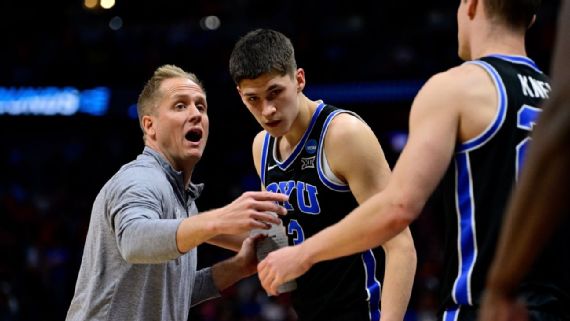
Beyond the financial incentives, the strategic transformation of college basketball programs themselves has been instrumental. Coaches with substantial NBA or G League experience are now actively modeling their teams after professional franchises. This includes everything from sophisticated offensive and defensive schemes, mirroring NBA playstyles, to rigorous workout routines, advanced nutrition plans, and comprehensive analytics departments. BYU`s Kevin Young, a former NBA assistant, explicitly structured his program to emulate professional ranks, promising Demin a system that would prepare him for the NBA better than any other. This wasn`t merely a promise; it was a delivered reality, culminating in BYU`s Sweet 16 run and Demin`s elevated draft stock.
Programs like Illinois under Brad Underwood exemplify this trend, consistently producing NBA talent across diverse profiles: international freshmen, one-and-done prospects, and seasoned veterans. This is due in part to a strong emphasis on developing players who are “professionals” – disciplined, mature, and intensely competitive. These college environments foster a culture that resonates deeply with NBA front offices.
The Pursuit of Polish and Professionalism
The NBA itself has undergone a subtle but significant shift. With escalating financial stakes and immense pressure to win, teams are increasingly prioritizing polished, ready-to-contribute talent over raw, long-term projects. This has opened the door for experienced upperclassmen, once considered “too old” in the heyday of the “one-and-done” era. A college player, having navigated the demands of a structured program, matured physically and mentally, and honed their skills in a competitive environment, often presents a less risky proposition. As one Western Conference scout noted, the appeal of college players is that “they`ve been coached right… It`s about discipline. It`s about being able to play with others first.”
The new NBA Collective Bargaining Agreement further reinforces this. By levying severe financial penalties on teams that overspend, it indirectly encourages the acquisition of value-driven talent, including more developed players who might be available in later rounds or via unique exemptions. This creates a broader market for players who benefit from more time in a structured developmental environment.
Beyond the Blue Bloods: Strategic Choices
Interestingly, this college renaissance isn`t solely benefiting basketball`s traditional powerhouses. Top prospects are now making strategic choices based on desired roles, systems, and available resources rather than just the prestige of a “blue blood” program. Many projected top picks this year hail from colleges where coaches and staff boast significant NBA experience. For instance, Illinois recruits benefit from assistants with Lakers experience, while Georgia players train with directors who`ve worked with NBA All-Stars. This underscores a burgeoning belief: the next generation of prospects won`t just hope for NBA-experienced staff; it will be a requirement for their chosen collegiate path.
Darrion Williams, an All-Big 12 first-team standout, chose NC State not for its historical pedigree but because its new coach, Will Wade, explicitly emulated a professional team`s makeup. The presence of a general manager with former NBA evaluation experience, who could provide data on the exact statistical marks needed for a first-round projection, was a decisive factor. This is a far cry from a decade ago, when a senior player like Williams might have been an afterthought.
The Future is Now
College basketball`s return to the summit of NBA player development is not merely a nostalgic resurgence but a sophisticated adaptation. By embracing NIL, mirroring NBA operational models, and prioritizing the cultivation of disciplined, polished athletes, collegiate programs have proven their unparalleled effectiveness. For aspiring professionals, the path through college now offers a unique blend of financial stability, high-level competition, professional preparation, and personal growth. The message is clear: if you want to make it to the NBA, the most professional route now surprisingly runs directly through the hallowed halls of college basketball.