The summer of 2024 was an anomaly in the relentless churn of NBA superstars chasing rings. No earth-shattering, league-altering free agency splashes or seismic trade demands dominated the headlines. Yet, beneath this veneer of tranquility, general managers were quietly sculpting rosters, making calculated bets that, a year later, would dramatically reshape the league`s competitive landscape. Of the four teams that reached the 2025 conference finals, only one – the Indiana Pacers – remarkably maintained their starting five from the prior season. This article revisits those pivotal moves, re-evaluating their immediate impact and long-term implications, often with the clear vision of hindsight.
The Blockbuster Swap: Randle for Towns

New York Knicks Get: Karl-Anthony Towns, Trade rights to James Nnaji

Minnesota Timberwolves Get: Donte DiVincenzo, Julius Randle, Keita Bates-Diop, 2025 first-round pick (via Detroit, top-13 protected)

Charlotte Hornets Get: Duane Washington Jr., Charlie Brown Jr., DaQuan Jeffries, 2025 second-round pick (via worse of Detroit and Philadelphia), 2026 second-round pick (via Golden State), 2031 second-round pick (via New York), $7.2 million cash
Original Grades: Minnesota: B+, New York: B | Regrades: Minnesota: B+, New York: B+
The trade that sent All-Stars Julius Randle and Karl-Anthony Towns swapping jerseys was arguably the centerpiece of the 2024 offseason. At the time, it felt significant, but its true genius became apparent as both the New York Knicks and Minnesota Timberwolves found themselves battling in their respective conference finals. A year later, it`s tempting to elevate both teams into the `A` tier, a testament to a true win-win scenario, though the full long-term financial ramifications are still unfolding.
The Timberwolves, for their part, emerged with improved perimeter depth in Donte DiVincenzo and, perhaps more critically, a financial reset. The combined salaries for DiVincenzo, Randle, and rookie Joan Beringer amounted to a notable reduction from Towns` solo salary, providing the fiscal breathing room to retain Naz Reid without breaching the second apron. Meanwhile, Towns seamlessly plugged a colossal hole at center for the Knicks, later shifting to power forward alongside a healthy Mitchell Robinson. His All-NBA third-team honors underscore his offensive contributions, even if his defensive nuances became a `champagne problem` for a franchise that hadn`t seen a conference finals in a quarter-century.

After being traded for each other last offseason, Karl-Anthony Towns, right, and Julius Randle led their new teams to their respective conference finals. (Photo by David Berding/Getty Images)
Brooklyn`s Strategic Yield: Mikal Bridges to the Knicks

Brooklyn Nets Get: Bojan Bogdanovic, 2025 first-round pick, 2027 first-round pick, 2029 first-round pick, 2031 first-round pick, 2028 first-round swap, 2025 first-round pick (via Bucks), 2025 second-round pick
New York Knicks Get: Mikal Bridges, 2026 second-round pick
Original Grades: Brooklyn: A, New York: B | Regrades: Brooklyn: A, New York: C+
The Brooklyn Nets executed a masterclass in asset management by trading Mikal Bridges at his perceived peak value. Securing a haul of five first-round picks and a swap for a player who, despite his immense utility, has never graced an All-Star roster, remains an enormous win for the Nets` rebuilding efforts. Two of their historic five first-round picks in this year`s draft, Nolan Traore (No. 19) and Ben Saraf (No. 26), directly stemmed from this shrewd transaction, with more to come.
For the Knicks, Bridges provided a valuable two-way presence, recovering from an early shooting slump to achieve an impressive 57% effective field-goal percentage. However, his defensive impact wasn`t quite the game-changer the Knicks might have envisioned, and his playoff scoring (15.6 points on 33% from deep) left a bit to be desired. On the upside, Bridges` relatively modest salary proved instrumental in facilitating the aforementioned Towns trade. Furthermore, if his arrival played a role in convincing former Villanova teammate Jalen Brunson to sign a below-market extension, then this move, despite the `C+` re-grade, was a strategic success for New York`s broader vision.
Thunder`s Championship Puzzle: Caruso and Hartenstein

Chicago Bulls Get: Josh Giddey

Oklahoma City Thunder Get: Alex Caruso
Original Grade for Caruso: Chicago: C-, Oklahoma City: A | Regrades: Chicago: C+, Oklahoma City: A
Oklahoma City Thunder Sign: Isaiah Hartenstein (Contract details: undisclosed)
Original free agency grade for Hartenstein: A- | Regrade: A
A year ago, forecasting the Oklahoma City Thunder as Western Conference favorites after acquiring Alex Caruso seemed bold. In hindsight, it didn`t go far enough. The Thunder, with their youthful core suddenly bolstered by these veteran additions, not only claimed 68 wins but astonishingly captured the NBA championship. Coach Mark Daigneault, initially judicious with Caruso`s regular-season minutes, unleashed him in the playoffs, notably starting him in the second half of Game 7 against the Denver Nuggets to defend three-time MVP Nikola Jokic – a bold, yet ultimately victorious, strategic gamble. Caruso’s unyielding defense proved pivotal in their title run.
The Chicago Bulls, despite receiving what many considered a `C-` initially, saw Josh Giddey elevate his game, especially after the All-Star break, nearly averaging a triple-double with impressive shooting efficiency. So, while they might have yielded more for Caruso, Giddey’s development makes the trade more palatable now. As for Isaiah Hartenstein, the only initial concern was his fit alongside Chet Holmgren. However, injuries delaying their on-court partnership only highlighted their eventual synergy. Hartenstein’s defensive prowess, screening ability, and high-post passing were crucial to OKC`s offensive flow. His team-friendly contract also offers crucial financial flexibility as the Thunder look towards future max extensions for Holmgren and Jalen Williams, a true masterstroke of roster construction.
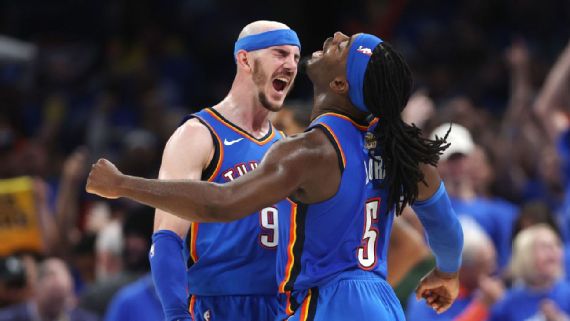
During the playoffs, playing time for Alex Caruso, left, increased as he played a key role in Oklahoma City`s title run. (Photo by Matthew Stockman/Getty Images)
Philadelphia`s Costly Gamble: Paul George to the Sixers

Contract Details: Four years, $212 million maximum
Original Grade: A | Regrade: D
It`s always easy to be brilliant after the fact. At the time, even the Los Angeles Clippers, who admirably rebuilt their playoff-caliber roster post-George, were prepared to offer him a three-year max deal. Nobody, it seems, truly anticipated that injuries would so severely diminish Paul George`s value, and so swiftly, on his new team.
George`s 16.2 points per game was his lowest full-season average since his sophomore year in 2011-12, a stark indicator of his struggles. His 36% three-point shooting also raised legitimate concerns about his ability to transition into a more complementary offensive role alongside Joel Embiid. After playing a mere 41 games in his inaugural season with the Sixers, George faces a summer of rehabilitation following recent knee surgery. While there`s still a glimmer of hope for him to contribute productively to a competitive Philadelphia team, especially if his 3-point accuracy rebounds to his 2023-24 Clippers form (41%), the age factor (35) always made the back half of a max contract a risky proposition. Failing to extract All-Star level production in Year 1 makes it exceedingly difficult for the 76ers to ever win this particular bet.
Atlanta`s Savvy Sale: Dejounte Murray to Pelicans

New Orleans Pelicans Get: Dejounte Murray

Atlanta Hawks Get: Larry Nance Jr., E.J. Liddell, Dyson Daniels, 2025 first-round pick (via Lakers), 2027 first-round pick (least favorable of Milwaukee/New Orleans)
Original Grades: Atlanta: B+, New Orleans: B+ | Regrades: Atlanta: A, New Orleans: F
This transaction began to look like a misstep for the New Orleans Pelicans even before Dejounte Murray suffered an Achilles rupture in January, an injury projected to sideline him for at least the initial months of the 2025-26 season. The core issue for New Orleans was the decision to sell low on Dyson Daniels, their No. 8 pick in the 2022 draft. At the time, the common wisdom was that top-10 picks traded so early often underperform because the selling team possesses more internal developmental insights. Oh, the irony! Daniels emphatically bucked that trend, rightfully claiming the Most Improved Player award after becoming the first player in decades to average a remarkable 3.0 steals.
Considering Daniels still had a year left on his incredibly team-friendly rookie contract, acquiring him for Murray alone would have been a more than reasonable return for Atlanta. But the Hawks’ shrewdness didn`t stop there. They also netted this year`s No. 22 pick, which was used to bring Kristaps Porzingis from the Boston Celtics, and another 2027 first-rounder that now looks significantly more promising given Giannis Antetokounmpo`s increasingly uncertain future in Milwaukee. A decisive win for the Hawks.
Denver`s Experiment: Russell Westbrook Joins the Nuggets

Contract Details: Two years, $6.8 million (player option for 2025-26)
Original Grade: D | Regrade: D+
On the one hand, signing Russell Westbrook to a minimum contract yielded an incredible return in terms of minutes and starts; he started 36 games and played over 2,000 regular-season minutes. As a starter, Westbrook capitalized on his transition game and Nikola Jokic`s exceptional passing, averaging respectable numbers with strong shooting efficiency. He seemed to defy the `D` grade initially assigned to the deal.
Yet, the story isn`t quite so simple. The amount of playing time coach Michael Malone allocated to Westbrook reportedly became a point of contention with former GM Calvin Booth, both of whom were dismissed later in the season. And when the Nuggets faced his former Thunder team in the playoffs, Westbrook struggled mightily, particularly in the final four games of the series. Ultimately, Denver’s championship aspirations likely suffered more than they gained from this union. The lack of interest in a reunion after Westbrook declined his player option, leaving him unsigned in free agency, speaks volumes about the perceived success of this experiment.
Klay Thompson`s New Horizon: Leaving the Bay for Dallas
Charlotte Hornets Get: Josh Green

Dallas Mavericks Get: Klay Thompson (via sign-and-trade)

Golden State Warriors Get: 2025 second-round pick (via lesser of Philadelphia and Denver), 2031 second-round pick (via Dallas)
Original Grades: Charlotte: B+, Dallas: B-, Golden State: B | Regrades: Charlotte: B, Dallas: B, Golden State: B
This particular deal, rather unglamorously, played out largely as all three teams might have anticipated, earning consistent grades a year later. Klay Thompson, starting all 72 games he played for the Mavericks, contributed to an offense that ranked fourth in offensive rating until Luka Doncic`s unfortunate calf injury. While Thompson wasn`t expected to carry a heavy offensive load as Dallas grappled with devastating injuries post-Doncic, he reliably provided his signature shooting and floor spacing.
Josh Green, though not a transformative player, started all 67 games for the Hornets, fulfilling his role without drastically altering the team`s record. The Golden State Warriors, meanwhile, expanded this sign-and-trade into a larger transaction that brought in Buddy Hield and Kyle Anderson. Hield`s explosive 33-point performance in Golden State`s Game 7 victory over the Houston Rockets likely justified the Warriors` decision on its own, showcasing the value of role players in critical moments.
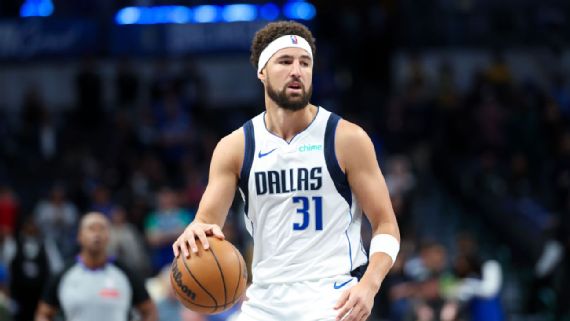
Klay Thompson started all 72 games in which he played last season for the Mavericks, who dealt with numerous injuries. (Kevin Jairaj/Imagn Images)
DeMar DeRozan`s Move to Sacramento

Sacramento Kings Get: DeMar DeRozan (via sign-and-trade)

San Antonio Spurs Get: Harrison Barnes, 2031 first-round swap (via Sacramento)
Chicago Bulls Get: Chris Duarte, Two second-round picks
Original Grades: Chicago: C, Sacramento: C+, San Antonio: A | Regrades: Chicago: D, Sacramento: C-, San Antonio: A
Optimism initially surrounded DeMar DeRozan’s reasonable contract with the Kings (three years, up to $77 million with $58 million guaranteed), hoping it might mitigate any potential fit issues. However, a year later, particularly after Sacramento pivoted to acquire Zach LaVine for De’Aaron Fox, the benefit of adding the 35-year-old DeRozan seems less clear. The risk of swapping picks with the San Antonio Spurs during Victor Wembanyama’s prime now appears significantly less justified.
The Chicago Bulls, frankly, received too much credit at the time. They ultimately gained little from this trade, missing out on both DeRozan`s direct contribution and the valuable pick swap. Their acquisition, Chris Duarte, played a mere 74 minutes before being waived. Conversely, Harrison Barnes proved a consummate professional, starting all 82 games for San Antonio and providing solid role-player value, with one year remaining on his $19 million deal. The Spurs, with their strategic long-term vision, remain the undisputed winners of this exchange.
Portland`s Unexpected Gem: Deni Avdija Joins the Blazers

Washington Wizards Get: Malcolm Brogdon, 2024 No. 14 pick (Bub Carrington), 2029 first-round pick (second-most favorable of Boston/Milwaukee/Portland), Two future second-round picks

Portland Trail Blazers Get: Deni Avdija
Original Grades: Portland: C+, Washington: B+ | Regrades: Portland: A-, Washington: B-
Initially, during Deni Avdija’s first few weeks with the Portland Trail Blazers, it appeared the team might have erred in betting on his 2023-24 shooting improvements. Avdija languished below 25% from three-point range and even lost his starting spot. Then, a remarkable transformation occurred. From Veterans Day onward, Avdija blossomed into arguably the team`s most consistent and impactful player, averaging 18.4 points, 7.5 rebounds, and 4.1 assists, coupled with vastly improved shooting splits (39% from three, 56% inside the arc). If Portland were to consider trading Avdija again, his favorable descending contract (from $14.4 million this season to $11.9 million in 2027-28) would likely command an even greater return in draft capital, underscoring the Blazers’ astute acquisition.
While the Wizards likely dealt Avdija at the opportune moment, given the potential difficulty of replicating his Portland performance within a full rebuilding scenario, their `B-` re-grade reflects a slight downgrade. The No. 14 pick, used on Bub Carrington, offers a promising asset, perhaps even better than what contending teams might have offered in a competitive bidding scenario. Nevertheless, the Blazers found a true gem.
Nets` Draft Pick Saga: Reacquiring Their Own
Brooklyn Nets Get: Return of 2025 first-round swap, 2026 first-round pick (via Nets)

Houston Rockets Get: 2025 first-round swap (via lesser of Rockets or Thunder for Suns), 2027 first-round pick (via Suns), 2029 first-round pick (via more favorable of Dallas and Phoenix), 2029 first-round swap (via less favorable of Dallas or Phoenix)
Original Grades: Brooklyn: B-, Houston: A | Regrades: Brooklyn: C-, Houston: A
This pick-for-pick deal provides an intriguing case study, particularly when considering whether other teams, perhaps even a hypothetical scenario with Giannis Antetokounmpo, should pursue similar strategies. A year down the line, it’s clear the Brooklyn Nets might have been better served by simply retaining the Phoenix Suns` picks they originally held.
The Houston Rockets, for instance, leapfrogged from No. 27 to No. 10 in last year`s draft due to this exchange – not far off Brooklyn`s own No. 8 selection. Houston also retains three powerful “bites at the apple”: the Suns` unprotected 2027 pick, and the two best picks between Dallas, Phoenix, and their own in 2029. While Brooklyn’s move to regain control over their own draft future is understandable in principle, in an era where a poor record no longer guarantees a top-four pick, maximizing lottery opportunities through other teams` distressed assets remains paramount. The Nets` grade slips, while Houston`s remains pristine.