Italian studio Milestone, with its three decades of expertise in developing racing games for both cars and motorcycles, taps into the country’s profound passion for speed—a sentiment mirrored by legendary brands like Ferrari, Ducati, Lamborghini, Aprilia, and Maserati. This rich heritage of velocity converges with a newer generation’s love for Japanese culture, particularly the impactful narratives of works like *Dragon Ball*. The result is *Screamer*, a game that skillfully blends these seemingly diverse influences into a refreshing and deeply satisfying experience from the very first moment.
Let’s delve deeper into what makes this game such a compelling blend before diving into the hands-on experience. *Screamer* is fundamentally a racing game, offering hours of engagement across its various arcade and multiplayer modes. More than just a revival, it re-imagines the 1996 original by injecting a vibrant dose of Japanese anime aesthetics and visual novel storytelling. The game’s central “Tournament” mode is a testament to this fusion, featuring captivating cinematics produced by an anime studio and extensive dialogues that weave a far more intricate and character-rich narrative than initially anticipated.
These Japanese influences elevate *Screamer* significantly, especially within the main Tournament mode. Positioned at the heart of the game’s striking main menu, this mode serves as an ideal entry point for players to grasp the numerous mechanics and become acquainted with the diverse cast of characters. For those seeking a more direct racing experience, other modes are readily available, offering pure adrenaline without the narrative interludes. Regardless of the chosen path, players will unlock new circuits and car customization accessories.
Players who choose to delve into the Tournament will find a long and intricate story. This mode is divided into four blocks, each comprising multiple chapters. These chapters often present varied objectives: winning a race, successfully executing specific techniques, achieving a certain number of eliminations, or performing sustained drifts. While the array of mechanics might sound daunting initially, *Screamer* introduces them progressively within the Tournament, ensuring a smooth learning curve that makes mastering the game feel intuitive and natural for arcade play.
Completing the Tournament is a substantial undertaking, demanding both skill in challenging trials and time to fully immerse in the expansive, ensemble narrative. This rich storyline explores themes of corporate intrigue, personal vendettas, self-improvement, romance, and the ever-interesting ethical debate surrounding the use of technological advancements. Investing time in the Tournament fosters a strong connection with the characters, allowing players to discover which drivers best suit their style, identify ideal choices for specific circuits or competition modes, and, most importantly, witness firsthand how each character’s personality—from a hot-tempered racer in a brutal machine to a calm, elegant driver—directly influences their vehicle’s handling.
One could dedicate the rest of this review to discussing the characters, their backstories, and their relationships—a surprising realization given that, initially, I would have sworn they were merely interesting accessories, my attention solely fixed on the driving. I was mistaken. I genuinely believed it was best to simply test the cars one by one, but the experience with *Screamer* has been profoundly enhanced by following the arc of, for example, Noboru Sato, once the world’s best “screamer,” drawn back into competition to help his brother, and capable of overcoming his Post-Traumatic Stress Disorder thanks to the best driver in the game. The sensation of driving with Noboru for the first time after a garage scene with Gage (best left unspoiled) is truly satisfying, making us feel part of the medley of emotions that course through this legendary driver’s body.
Now that the warm-up laps are complete, let the race begin. Literally, in *Screamer*, many races commence with “The Voice” shouting “burn!”, though many chapters will launch you directly onto the moving track after a brief sequence. The main difference is that the former allows you to leverage an initial boost by synchronizing an L1 press with the starting signal—perhaps one of the few mechanics the game doesn’t explicitly explain. Before hitting the first turn, it’s crucial to know that in addition to controlling the car’s direction with the left joystick, you’ll use the right to manage drifts, a system somewhat different from the usual accelerator on the right trigger and brake on the left. There’s another boost at your disposal: each time a gear change is required due to engine revolutions (indicated on the bottom left speedometer), pressing L1 allows the vehicle to maximize that gear shift.
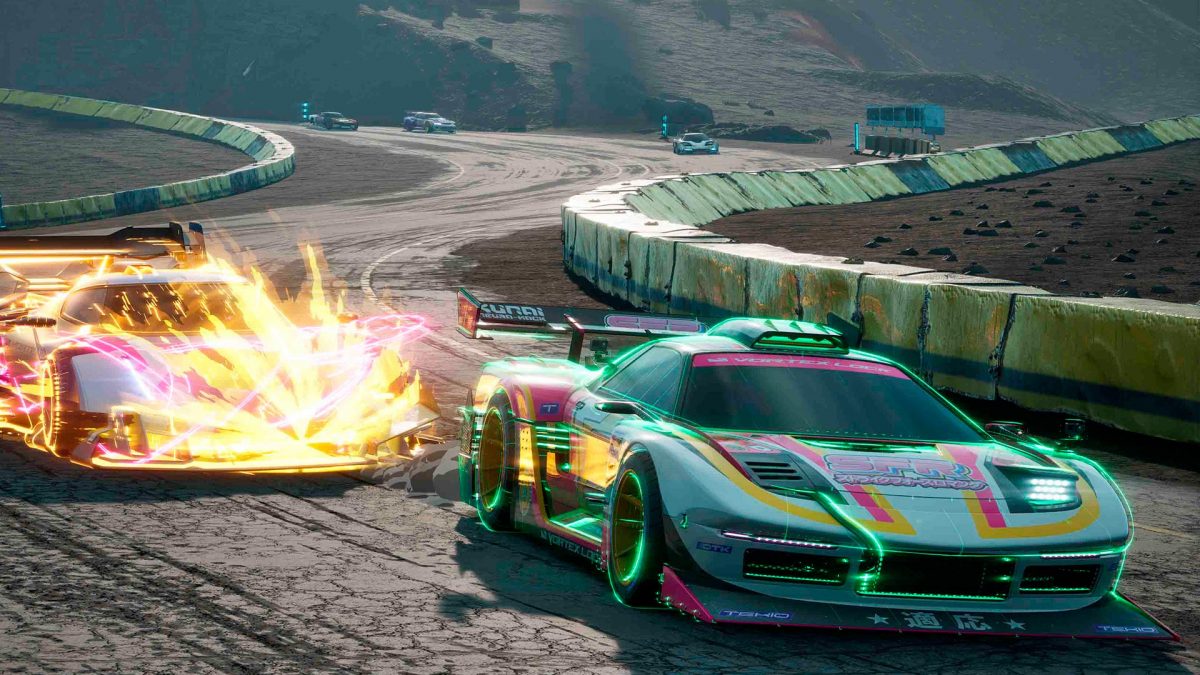
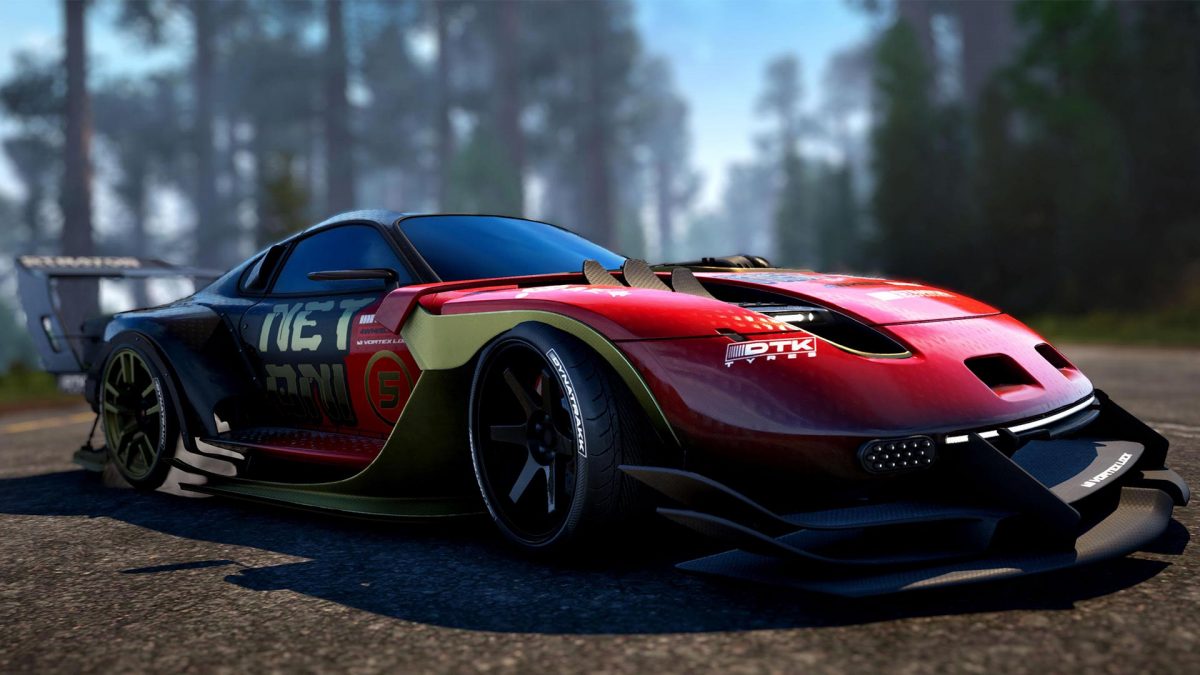
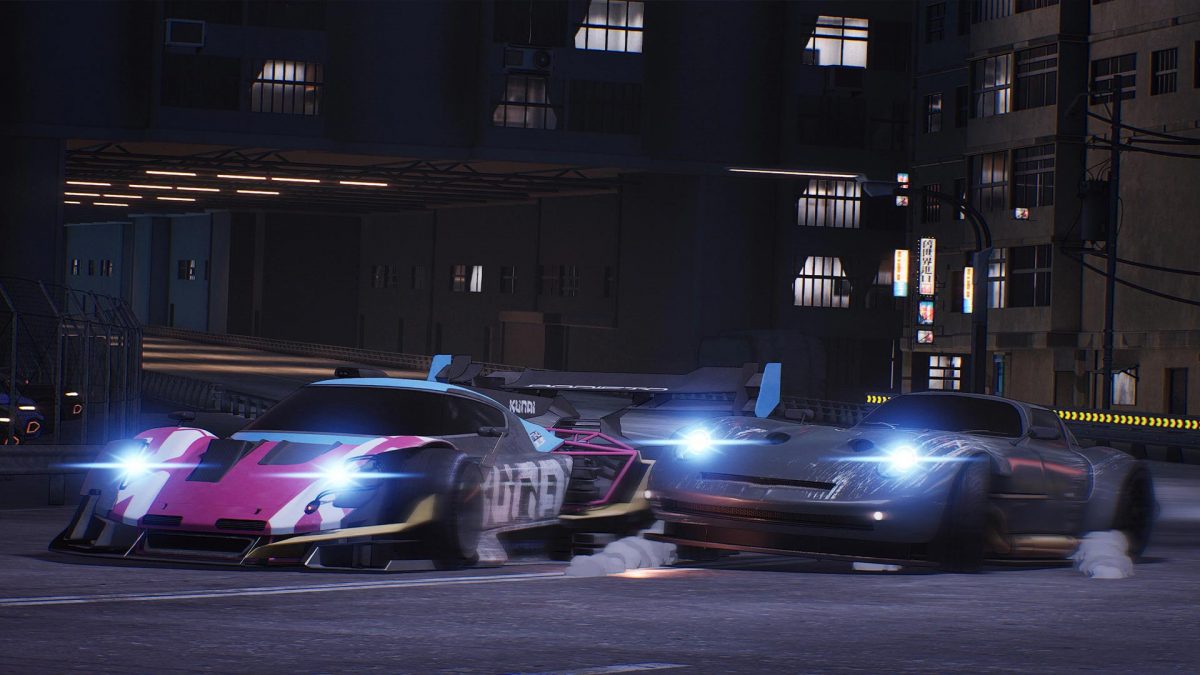
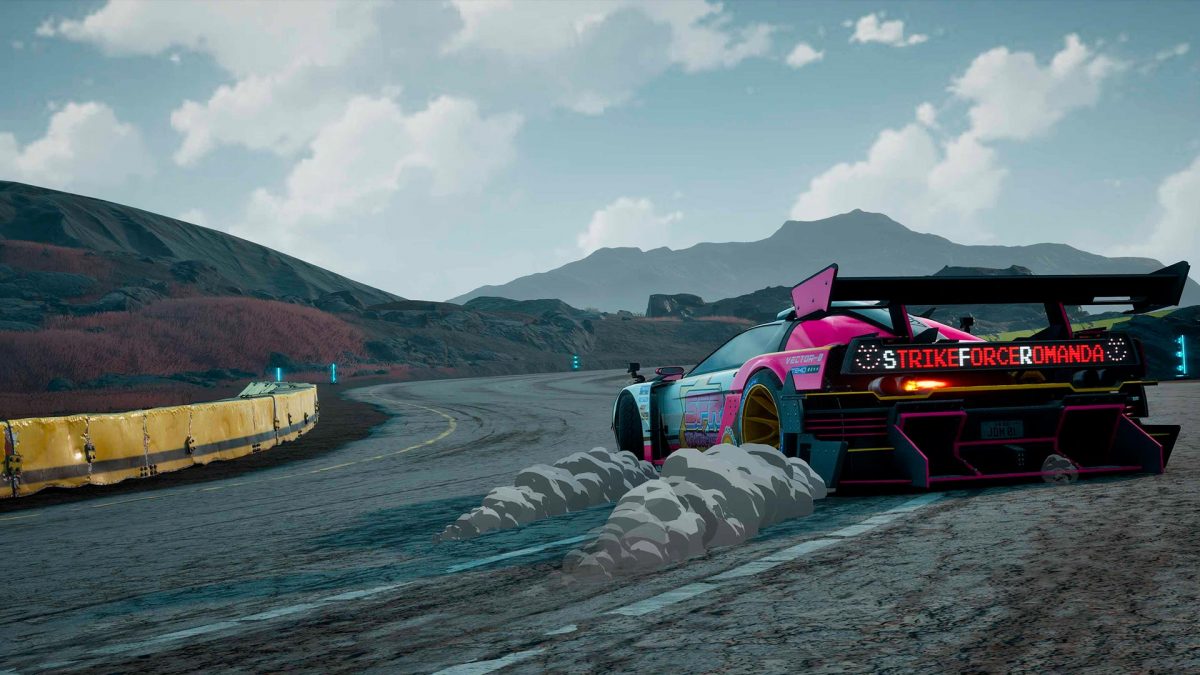
This covers the traditional driving aspects of *Screamer*. Piloting in this game is a joy; it’s something you’ll do calmly in individual modes that allow time trials over several laps or unlimited laps in checkpoint mode, which ends when you fail to reach the next checkpoint before the clock hits zero. However, most of the time, you won’t be alone on the asphalt. In *Screamer*, simply driving well isn’t enough; you’ll need to utilize everything the “Echo System” offers to battle while driving. This system holds undeniable relevance to the plot, providing a plausible explanation for why cars can be exploded without consequence, and, above all, it’s the gateway to chaotic yet fun gameplay.
This system is represented by a horizontal bar at the top of the screen, extending from the center. To the left, a series of greenish segments charge, representing energy that can be used by holding L1. Once a segment is available, you can execute a turbo boost that will last longer if the button is released at the indicated moment—again, a mechanic that might seem complex at first but quickly becomes internalized and automatically executed when its benefits are clear.
The right side of this indicator fills with a pinker hue and is dedicated to direct combat. With a tap of R1, you can activate a rear shield to protect against rival attacks, an offensive maneuver you can anticipate thanks to geometric shapes that flood your screen depending on the enemy car’s proximity—few and orange if it’s near, many and red if a crash is imminent. It’s not all about racing and defending; if you choose to eliminate cars ahead, you can hold R1 to propel your car forward momentarily. If you contact an unshielded vehicle during this impulse, it will explode.
This system opens up a world of possibilities. Your chosen strategy will be influenced by what others do, so a more flexible approach might be best. Some might prefer to simply race and protect themselves, while others might opt for a destructive style. Everything is valid, as in team-based point races—a truly fun mode—points are accumulated based on both your position and eliminations. However, your teammates’ achievements also factor in, so positions can shift until the very end, even if the race leader seems to have a traditional victory within reach.
Oh, I almost forgot! There’s one more mechanic: if you choose to save energy and fully charge the Echo System bar, you can activate “Override.” This is a sort of ultimate attack that launches your car like a Mario Kart star, making it momentarily invincible and destructive, but then leaves it defenseless for a few seconds. It’s a double-edged sword that can eliminate many rivals but will send you flying if you hit a wall, which is quite common in *Screamer*.

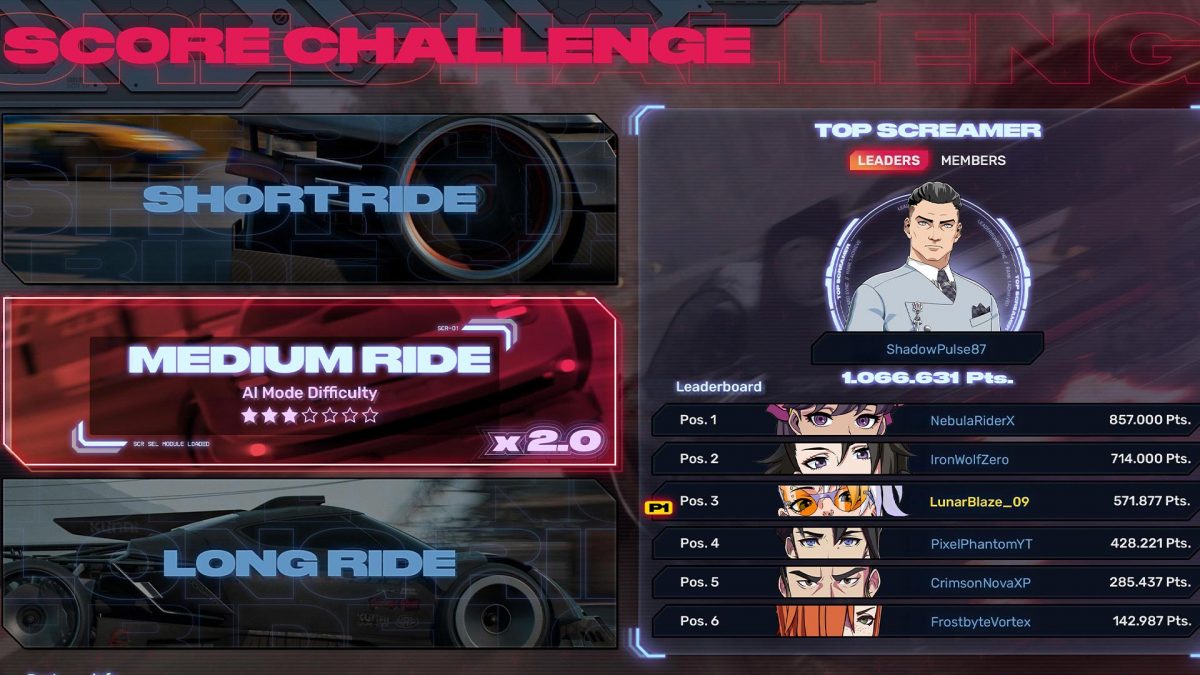


There is, in fact, an arcade race type where you must try to survive as long as possible with Override activated while eliminating cars. It doesn’t take long to realize that mastering a car with so much untamed horsepower is far from easy. However, mastering the driving itself isn’t the most difficult part of the game; certain story chapters pose very demanding objectives, especially with vehicles designed for combat or specific terrains rather than competing for the top positions. All cars have their charm, and each character also boasts a unique ability, but team leaders enjoy faster vehicles, while the other two group members are often better choices for group play and effective use of combat mechanics.
It’s understandable that with everything *Screamer* by Milestone offers, some might think they’ve overshot the mark. However, after playing, everything comes together perfectly. The story gains nuances and interest, allowing characters to grow and the tournament races to truly matter. The tournament effectively teaches everything needed for the arcade mode to be a truly appealing time sink, especially given the extensive customization options for each race, including system inclusions/exclusions, AI difficulty, participating vehicles, race length, and many other values. *Screamer* is, once the experience is complete, a delicious blend capable of satisfying both seasoned racing game enthusiasts and newcomers to the genre. It’s a proposition so entertaining that many will find themselves coming back for more, time and again.