OTTAWA — For many years, the NHL draft felt like the Ottawa Senators` equivalent of the Stanley Cup. Hope would always emerge from the disappointment of another season without the playoffs.
That era is over. After ending their playoff drought, the Senators hold the 21st pick in the upcoming draft.
This brings a new perspective to Ottawa. While the distant future is interesting, the immediate present holds more significance for both the fans and, to some extent, the organization itself.
Typically, after a team makes the jump to the postseason, the general manager aggressively seeks out a player who can make an immediate impact. However, the Senators face a limitation because their prospect pool is not deep.
Having traded away first-round selections in three consecutive years, the team possesses only one elite prospect: last year`s seventh overall pick, Carter Yakemchuk. Furthermore, the team anticipates losing next year`s first-round pick due to the poorly executed Evgenii Dadonov trade.
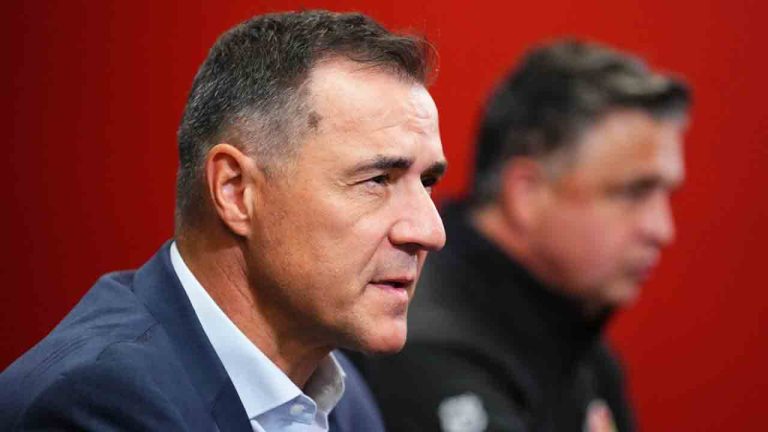
Therefore, a more cautious approach for GM Steve Staios might involve retaining the pick and drafting a promising young player. Nevertheless, Staios maintains that `everything is on the table,` indicating a possibility that he could trade the pick for a proven piece like Calgary`s Rasmus Andersson or Buffalo`s J.J. Peterka.
Regarding prospects, in Staios`s first draft last year, all seven of Ottawa`s selections were six-foot-two or taller. Staios denied prioritizing size, but it will be interesting to see if this trend continues this year.
If the Senators do make the pick at 21st overall, they will likely select the best player available. Ottawa is not in a position to draft based on specific positional needs given the limited talent in their development system. It might also be a smart move for the Senators to trade down from the 21st spot to recover some much-needed draft capital.
Draft Picks
First, Third (via Florida), Fourth (via San Jose), Fifth, Sixth, Seventh
Potential Round 1 Options
Jack Nesbitt, C, 6-foot-4, 185 pounds, Windsor Spitfires (OHL)
According to scouting expert Jason Bukala, Nesbitt would be a perfect fit for Ottawa. He is a large forward who can play both center and wing and provides high-level competitiveness and excels in front of the net battles. He is effective in the bumper position on the power play. Nesbitt scored 25 goals and 64 points for Windsor last season.
Bill Zonnon, C, 6-foot-2, 190 pounds, Blainville-Boisbriand Armada (QMJHL)
Zonnon is a player likely to still be available at pick 21 for the Senators. Bukala describes him as “Brady Tkachuk lite,” which is appealing to Senators fans. Zonnon is extremely competitive, big, strong, and dominant around the net. Like Tkachuk, his skating isn`t the strongest aspect of his game, but he is always engaged in the play. If his skating improves, he could become a significant asset at the NHL level.
Blake Fiddler, D, 6-foot-4, 209 pounds, Edmonton Oil Kings (WHL)
Fiddler fits the profile of a second-pairing, shutdown defenseman. He is big, strong, consistently positioned correctly, blocks shots, and is an excellent skater. His father, Vernon Fiddler, played in the NHL. He is unlikely to be a high-scoring player at the next level but could serve as an ideal elite defensive anchor for the Senators.
Malcolm Spence, LW, 6-foot-1, 203 pounds, Erie Otters (OHL)
If the Senators are looking for a player with high potential, Spence fits the bill. He generates offense through his size, speed, and skill. However, questions have been raised about his work ethic. The Senators have typically avoided players who lack an elite competitive drive, but Spence`s best shifts are arguably more impactful than those of the other mentioned players. He recorded 32 goals and 73 points with Erie.
Last Year`s Top Pick
Some observers, including this writer, believed Yakemchuk might make the Senators roster right out of training camp last season. However, following his promising pre-season performance, his play in the Western Hockey League left scouts somewhat unimpressed. Despite this, Senators management was pleased with his WHL season, and Bukala characterizes him as a `workhorse.` Yakemchuk`s production decreased from over a point-per-game in his draft year to 49 points in 56 games with the Calgary Hitmen this season.
Yakemchuk possesses smooth puck handling, loves to compete, is very strong and physical, and has a creative offensive mind complemented by a powerful shot. Nevertheless, his skating still requires improvement. He mentioned during last season`s training camp that refining his skating was a key focus.
Another noticeable weakness in Yakemchuk`s game—keeping in mind he is only 19—is his defensive play and puck retrieval at five-on-five, according to Bukala. In his own end last season, he frequently lost coverage, which led to Calgary being hesitant to use him on the penalty kill. If he can develop his defensive abilities, he has the potential to become an elite NHL defenseman.
Some individuals within the Senators organization believe Yakemchuk could be ready for the NHL and join the team this upcoming season, but Bukala is skeptical of his readiness. This writer also shares that skepticism, but with Nick Jensen`s injury creating a significant void on the right side of the Senators` defense, the need is even greater. The Senators might already regret passing on Zeev Buium, the defenseman selected by the Minnesota Wild who debuted in the playoffs. Yakemchuk`s progress this season and beyond—whether in the American Hockey League or in Ottawa—will be a major storyline to watch if the Senators aim to transition from a good playoff team to a truly great one. No pressure, kid.