
As the 2024-25 NBA season concludes, we shift our focus to the offseason strategies for each team that did not make the playoffs. This analysis covers draft prospects, free agency plans, and potential trades.
Which teams in the lottery will land the coveted No. 1 pick and the opportunity to select Cooper Flagg? How quickly can teams like the Washington Wizards, Utah Jazz, and Charlotte Hornets accelerate their rebuilding processes?
This article breaks down potential offseason moves for every franchise, examining roster status, financial situations, front office priorities, extension-eligible players, team needs, and future draft capital.
Key: ETO = Early Termination Option | P = Player Option | R = Restricted | T = Team Option
Team Overviews:
ATL | BOS | BKN | CHA | CHI | CLE
DAL | DEN | DET | GS | HOU | IND
LAC | LAL | MEM | MIA | MIL | MIN
NO | NY | OKC | ORL | PHI | PHX
POR | SAC | SA | TOR | UTAH | WAS

 Utah Jazz
-
2024-25 record: 17-64
-
Draft picks in June: No. 1/2 (own), No. 22 (via Minnesota), No. 44 (via Dallas) and No. 52 (via LA Clippers). Note: Draft ties will be resolved after the regular season.
-
Odds for the No. 1 pick: 14%
-
Free agents: John Collins (P), Micah Potter (R) and Oscar Tshiebwe (R)
Roster Analysis:
Rebuilding often entails a period at the bottom of the league, especially after trading away established starters. However, after trading Donovan Mitchell and Rudy Gobert in 2022, the Jazz initially exceeded expectations in the 2022-23 season. Now, nearly three years later, the Jazz are intentionally rebuilding.
`This year, we are focused on building a strong foundation of young talent. Our growth will come from developing this talent base to achieve sustained success,` Jazz GM Justin Zanik stated before the season. `This is a long-term process.`
The Jazz concluded the season with the youngest roster, tied with Oklahoma City, featuring nine players aged 23 or younger. Unlike the Thunder, wins were infrequent for Utah this season.
The Jazz experienced their first 60-loss season in franchise history and haven`t had a three-game winning streak since January 2024. Yet, there are positive signs.
Rookie Isaiah Collier led all rookies in assists this season, also setting a Jazz rookie record. Walker Kessler ranked second in total blocks, only behind Victor Wembanyama. The 2025 draft presents another opportunity to bolster the roster. Utah has a 14% chance at the top pick and holds three additional picks, including a first from Minnesota. With all 15 players under contract for next season and $60 million in expiring contracts, the Jazz have financial flexibility for potential trades.
Offseason Finances:
With two first-round picks and 15 contracted players, Utah is expected to operate as an over-the-cap team this summer. Including draft picks and $15 million in non-guaranteed contracts, they are near the salary cap. Decisions on contracts for Svi Mykhailiuk ($3.7 million) and Johnny Juzang ($2.8 million) are due by June 30. John Collins has until June 27 to decide on his $26.6 million player option. Utah will have access to various exceptions, including the non-tax midlevel ($14.1 million) and biannual ($5.1 million) exceptions.
Top Front Office Priority:
The draft is paramount. Five of the 15 contracted players (Cody Williams, Isaiah Collier, Keyonte George, Taylor Hendricks, Brice Sensabaugh) were Utah`s first-round picks in the last two years.
While showing individual promise, none are yet considered franchise cornerstones. This draft could change that. After drafting outside the top eight in recent years, Utah is guaranteed at least the No. 6 pick.
Decisions are also needed on veterans Markkanen, Collins, Clarkson, and Sexton. Markkanen is contracted for four more seasons, but Collins, Clarkson, and Sexton are in their final contract year. Markkanen, after a recent extension, is now trade-eligible. He played a career-low 47 games this season, attempting a career-high 3-pointers but with a near career-low percentage of 35%.
Extension Candidate:
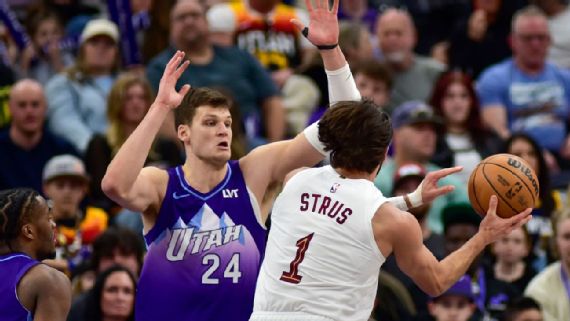
Utah could have over $70 million in cap space in 2026, and despite Walker Kessler`s affordable contract, they can be aggressive. Kessler is the first player since Tim Duncan to average at least two blocks per game in his first three seasons. He also set career highs in points (11.1), rebounds (12.2), and assists (1.7), shooting a league-leading 66.3% from the field.
Other extension-eligible players: Collins and Sexton
Team Needs:
Improvement in both offensive and defensive systems is crucial. Utah ranked last in turnover percentage and allowed the most transition opportunities, also ranking 29th in defense and last in points off turnovers and fast break points allowed.
Future Draft Assets:
The Jazz possess 11 first-round picks, including five unprotected picks from Cleveland and Minnesota, plus an unprotected 2031 first from Phoenix. They have various pick swap options and nine second-round picks for potential trades.
 Washington Wizards
-
2024-25 record: 17-64
-
Draft picks in June: No. 1/2 (own), No. 18/19 (via Memphis), No. 40 (via Phoenix). Note: Draft order will be finalized after the season. Memphis pick is top-14 protected.
-
Odds for the No. 1 pick: 14%
-
Free agents: Malcolm Brogdon, Khris Middleton (P), Tristan Vukcevic (R) and JT Thor (R)
Roster Analysis:
The Wizards are committed to a long-term rebuild. `We are in the foundational phase, deconstructing and rebuilding. It’s important to remember we are still in the early stages,` said GM Will Dawkins before the season.
This season highlighted the challenges of building from the ground up. As the youngest team by playing time, with seven players 23 or younger, the Wizards endured two 16-game losing streaks.
There were bright spots. Second-year player Bilal Coulibaly and rookie Alex Sarr emerged as key pieces. Coulibaly was statistically strong defensively before a season-ending injury. Sarr improved significantly post-All-Star break, averaging 16.8 points and shooting 38% from three. The team`s performance improved with the acquisitions of veterans Khris Middleton and Marcus Smart. The Wizards were 5-4 when both played. The return of Saddiq Bey from injury will also be beneficial.
For the second consecutive year, Washington will add a high lottery pick. They have a 14% chance at the No. 1 pick, a first-round pick from Memphis, and three additional second-round picks.
Offseason Finances:
The Wizards used potential cap space to acquire draft assets by trading for Middleton and Smart, gaining a 2025 Memphis pick, a 2028 pick swap with Milwaukee, and AJ Johnson. They are $14 million below the tax and have $20 million in non-guaranteed contracts. Decisions on contracts for Richaun Holmes, Justin Champagnie, Anthony Gill, and Colby Jones are upcoming. Middleton has a player option decision by June 29. Washington has access to midlevel, biannual, and veteran minimum exceptions, plus trade exceptions.
Top Front Office Priority:
Managing the draft and their five picks is critical. For the second year in a row, they have a projected top-4 pick and a pick in the mid-20s. Last year, they traded to move up and draft Kyshawn George, who started 36 games and averaged 8.6 points. With 16 future second-round picks, they may pursue similar draft strategies.
The future of veterans is also a priority. Middleton, Smart, and Holmes have nearly $70 million in expiring contracts. The Wizards must decide if they will continue absorbing salary for more draft assets. They project to have significant cap space in 2026-27.
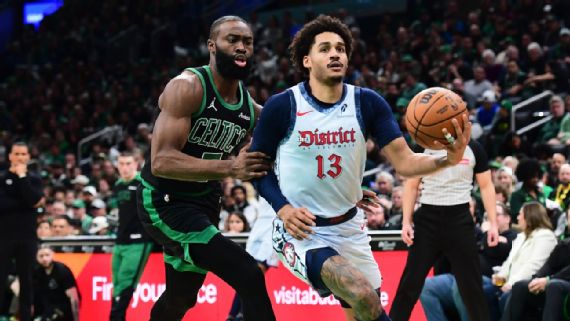
Jordan Poole`s future is another consideration. Despite past criticisms of his contract, Poole improved this season, setting career highs in points, assists, steals, and 3-point percentage. He is extension-eligible from October 1.
`The potential is high here in Washington. We have a dedicated and talented group who love the game,` Poole commented.
Extension Candidate:
The Wizards have several players on first-round rookie contracts, but none are currently extension-eligible.
Other extension-eligible players: Malcolm Brogdon, Khris Middleton, Marcus Smart, Jordan Poole (from Oct. 1), and Colby Jones
Team Needs:
Finishing last in offensive efficiency and 28th in defense highlights numerous needs. Perimeter play improvement is essential, as the Wizards ranked poorly in 3-point and true shooting percentages. Defensively, acquiring a rebounding and perimeter-defending big man is a priority.
Future Draft Assets:
The Wizards have 26 draft picks through 2032, including 10 first-rounders, with four acquired in the last two seasons. They hold favorable or swap rights to several future first-round picks and possess 16 second-round picks.
 Charlotte Hornets
-
2024-25 record: 19-62
-
Draft picks in June: No. 3 (own), No. 33 (own) and No. 34 (via New Orleans). Note: Draft lottery on May 12 will determine first-round position.
-
Odds for the No. 1 pick: 14%
-
Free agents: Seth Curry, Taj Gibson, Tre Mann (R) and Wendell Moore Jr.
Roster Analysis:
Playoff contention was not the 2024-25 goal for Charlotte. `I`m not interested in a fleeting playoff appearance. We need sustained success,` stated first-year GM Jeff Peterson in February. The focus was on building a foundation and evaluating the roster.
The Hornets have prioritized long-term roster construction, adding six draft picks since October. Despite another 50-loss season, the evaluation is ongoing. Injuries to LaMelo Ball and Brandon Miller impacted the season significantly. Charlotte had the second-most missed games and used 36 lineups. The core lineup of Ball, Miller, Bridges, and Williams played together minimally but showed promise.
There are positives moving forward. The Hornets have a strong chance at a top-4 pick to join Miller, Ball, and Tidjane Salaun. They also have two early second-round picks. With limited high-salary contracts outside of Ball, they have trade flexibility.
Offseason Finances:
Acquiring an extra first-round pick at the deadline led to taking on Jusuf Nurkic`s salary. Nurkic`s contract, their own first-round pick, and Tre Mann`s cap hold put Charlotte slightly over the salary cap. Decisions on Josh Okogie`s guaranteed contract are due June 30. Charlotte has access to midlevel, biannual, and veteran minimum exceptions.
Top Front Office Priority:
With three draft picks, the Hornets have three key priorities. LaMelo Ball`s future is paramount. While contracted long-term, his durability is a concern. He`s only played over 60 games once in five seasons and has missed significant time in the last three. The team struggled without him. Developing his game further, especially off-ball, and leadership are key.
Miles Bridges, the longest-tenured Hornet, is another priority. He has averaged over 20 points for two seasons and is one of two Hornets with multiple 45-point games. His efficiency post-All-Star break needs improvement. His contract structure is also a factor.
Finally, Tre Mann`s new contract needs to be determined. After extension talks failed, he averaged 14.1 points with 40% 3-point shooting, but injuries limited his games.
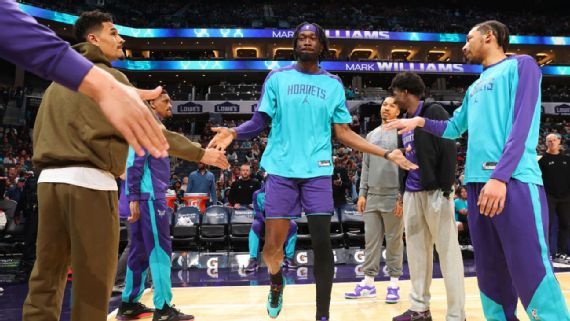
Extension Candidate:
After a trade for Williams fell through, he averaged strong numbers, but defensive metrics are a concern. The Hornets` defense suffers when he`s on the court, and opponents shoot effectively near the basket against him.
Other extension-eligible players: Jusuf Nurkic and Grant Williams (from July 11)
Team Needs:
Beyond health and consistency, developing Tidjane Salaun is important. Improved shooting is also a major need, as the Hornets ranked last in effective field goal percentage.
Future Draft Assets:
The Hornets control all their first-round picks through 2031 and have additional firsts from Miami and Dallas, with conditions on protection and conveyance. They can trade multiple first-round picks and have a significant number of second-round picks.